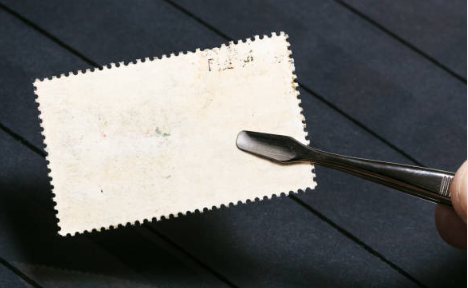
You do not need a desk full of equipment to begin collecting stamps. A pair of stamp tongs, safe storage, a magnifier, and a reliable reference are enough for most beginners.
The basic kit
- Stamp tongs: smooth-ended tools that reduce fingerprints, bending, and surface damage.
- Stockbook or album: storage that holds items without ordinary tape, glue, or pressure-sensitive household plastic.
- Magnifier: useful for printing details, faults, and cancellations.
- Reference: a catalog, museum database, or specialized handbook for identification.
Tools to add when the collection becomes specialized
A perforation gauge distinguishes issues with similar designs but different perforation measurements. A watermark detector can reveal marks incorporated into paper. A color guide may help with documented shade differences. These tools support identification; they do not replace expertise when a valuable item is in question.
What not to use
- Kitchen tweezers with sharp or ridged tips
- Adhesive tape or glue on stamps and covers
- Cheap PVC pages with uncertain long-term stability
- Unlabeled chemical fluid
- A phone photograph as the only authentication method
Storage is a tool too
Keep collections away from heat, direct sunlight, moisture, pests, and rapid humidity changes. Packaging-condition concerns appeared in 787 local product reviews; that does not measure collector damage, but it is a useful reminder that paper objects can be harmed before close study begins.
The Smithsonian’s Tools of the Hobby explains tongs, gauges, magnifiers, and watermark detection.
Choose tools by the problem they solve
A useful kit does not need to be large. Smooth-tip stamp tongs prevent fingerprints and creases; a 10× magnifier helps inspect printing and damage; a perforation gauge supports identification; and an acid-free stock book provides reversible storage. Add a watermark tray or color guide only when your chosen material actually requires it.
Safe-use checklist
- Test tongs on common material and replace them if the tips are sharp or misaligned.
- Keep liquid and watermark fluid away from children, heat, and finished album pages; follow the product label.
- Do not force a stamp into a tight mount or attach it with household tape.
- Calibrate digital measurements with a ruler and photograph both sides in even light.
Tools support identification; they do not prove rarity on their own. A perforation count, color impression, or watermark should be checked against a catalog entry that matches the issue, denomination, printing, and format. Keep uncertain findings labeled as provisional.
The American Philatelic Society offers collector education and research resources. For a sequence that shows when each tool becomes useful, see our beginner collecting plan. MaxPob does not appraise individual items or endorse a tool merely because it is sold through a marketplace.
Related collecting guides
Editorial note: Historical claims in this article are based on cited USPS and Smithsonian material. MaxPob’s local keyword and review datasets help identify reader questions and collecting concerns; marketplace reviews are not used as proof of postal history, rarity, or value. See our research methodology.
Primary topic: Stamp Collecting. Start with Stamp Collecting for Beginners.