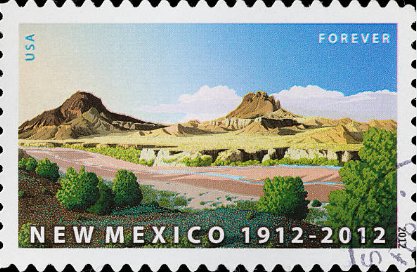
Landscape stamps compress a place into a very small frame. The strongest designs do more than show a pretty view: they identify a location, choose a season or viewpoint, and connect scenery with public memory.
A documented example: National Parks in 2016
For the National Park Service centennial, USPS issued a pane of 16 Forever Stamp designs. The subjects ranged from Glacier Bay and Mount Rainier to Arches, Everglades, Haleakalā, Yellowstone, and Carlsbad Caverns. The pane mixed photography, painting, architecture, wildlife, and historic objects rather than reducing “landscape” to mountains alone.
How to look at a landscape stamp
- Identify the exact place rather than guessing from the image.
- Find the credited photographer, artist, or source work.
- Notice whether the design emphasizes geology, wildlife, recreation, or preservation.
- Compare it with earlier stamps of the same place.
- Keep the issue announcement or a short research note with the collection.
Collecting by place
A geographic collection can follow one state, a park system, coastlines, deserts, rivers, or places visited by the collector. Covers mailed from a nearby Post Office or carrying a relevant pictorial cancellation add postal context.
Condition and image rights
Store panes flat and handle them with tongs. When researching online, use museum object records and official USPS announcements; do not assume every marketplace image is correctly labeled or free to republish.
See the official National Parks stamp announcement and the National Postal Museum U.S. collection.
Identify the place before interpreting the landscape
Landscape stamps often compress a large place into a carefully selected view. Record the named location, issue date, artist or photographer, and whether the image is a photograph, painting, or composite. Compare those facts with the relevant park, land agency, or museum record before describing the ecology or historical meaning.
Details a collector can verify
- Does the stamp name a specific park, state, trail, or geographic feature?
- Was the source image contemporary with the issue or based on an earlier work?
- Do pane text or selvage add species, conservation, or location information?
- Has the official place name changed since the stamp was issued?
Color is not a reliable identifier when a stamp has faded, a scan uses automatic correction, or different printings exist. Use perforations, format, denomination, and catalog data together. When mounting a used landscape stamp, retain readable cancellations because they can connect the image to an actual mailing place and date.
Use the USPS release archive for design credits and the appropriate land agency for place facts. The collector-tool guide explains magnification and measurement without destructive handling.
Related collecting guides
Editorial note: Historical claims in this article are based on cited USPS and Smithsonian material. MaxPob’s local keyword and review datasets help identify reader questions and collecting concerns; marketplace reviews are not used as proof of postal history, rarity, or value. See our research methodology.
Primary topic: U.S. Stamp History. Start with The First U.S. Postage Stamps.